
Case Study: Cross-fit Training
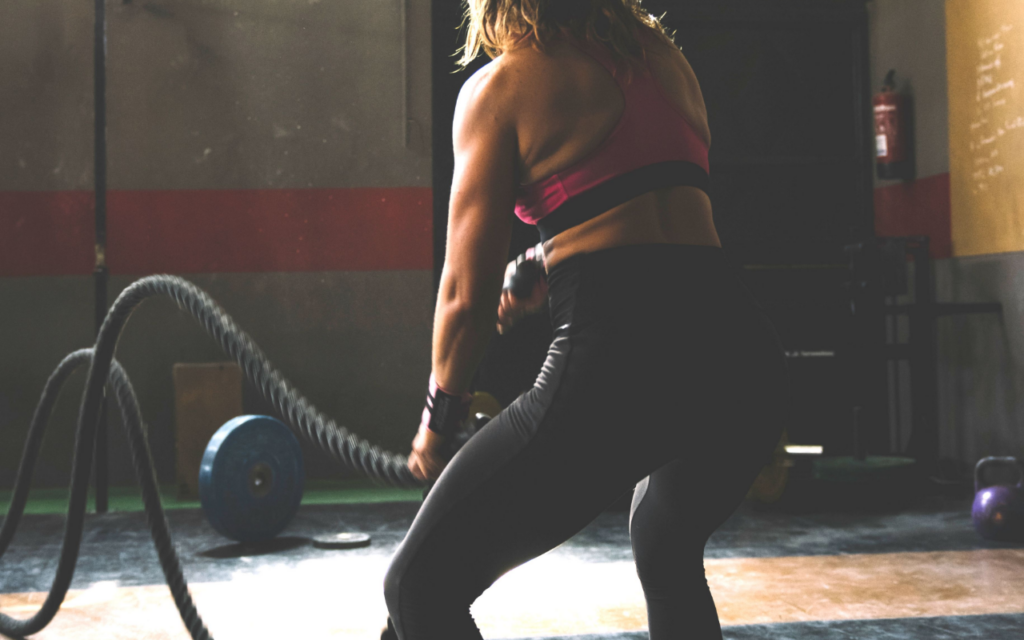
43-Year-Old Female Accountant Maintains Strength Through Cross-Fit Training
History
Our client came to us after developing Left Scapula and Forearm pain that was keeping her from performing her best at her Cross-Fit Training classes. Her baseline is snatching 50 lbs and shoulder pressing 45 lbs. She was going to the gym 4 times per week, but the pain started to affect her enjoyment.
Workouts, lifting weights, shoulder abduction and sleeping on her left side aggravated her pain. She had been experiencing headaches, tight neck and shoulders for which she sought regular massage.
Working from home as an accountant, she would sit at her dining room table with her laptop in front of her and a second monitor to the left. Looking left had been a repetitive motion for the last 3 months at her new job.
Pain scale: 6 out of 10.
Functional scale (how life is affected): 5 out of 10
First Visit
Assessment
The physiotherapist checked our client’s standing alignment and found shifts in the cervical spine (neck) at C6 and C7 vertebrae. That meant that the C 6 and 7 vertebrae were being pulled from their centred position by tense muscles of the neck. The shoulder blades were too close together. The pectoral chest muscles were found to be tender and tight. Bending and straightening of the left elbow caused a visible, involuntary twitching of the biceps and triceps. There were tender, palpable knots in the left deltoid (the bulky muscle of the upper arm) and in the forearm muscles, specifically extensor carpi radialis longus (ECRL) and the extensor carpi radialis brevis (ECRB).

Treatment
The Physiotherapist assessed the movement of lifting the arm sideways and bending the elbow to determine the best correction for alignment. It was found that correcting shoulder blade and elbow alignment made the biggest difference toward relieving pain and improving the quality of movement.
Deep tissue massage was provided for the knotted pectoral, deltoid and forearm muscles. At Physio for Life, we focus on providing hands-on treatment to address the root cause of the problem, rather than defaulting to modalities that may only provide comfort for a short period of time. The problem in this case was incorrect gym technique when lifting weights and using the machines.
The Client learned how to do her own home treatment, including self stretches and massage, and most importantly, practiced correct body mechanics during gym exercises.
Second Visit
Assessment
Our Client reported that she was able to work out with minimal pain using 20 lb weights at present, lower than her usual is 45-50 lbs. She had pain in the back of the shoulder upon waking after lying on it.
Her shoulder blades had excessive mobility when moving away from or towards each other. There was a loss of centering in the shoulder joint with lifting the arm sideways and the shoulder blades were not providing enough stability to the shoulder joint.
Feeling of the muscle knots of the previous session showed that the involved muscles were less tender and tight than at the previous session. Tightness was still found in the posterior deltoid and rhomboids (muscles between the shoulder blades).
Treatment
Deep Tissue Massage was again provided for the above muscles. Shoulder blade stabilization exercises were performed on hands and knees – push ups and alternating arm and leg lifts with elastic resistance (theraband) Theraband exercises were done with the shoulder blade stabilized manually, avoiding incorrect movement. With treatment, both the shoulder and shoulder blade were moving correctly and with no pain.
Third Visit
The Physiotherapist continued fine tuning of alignment and postural issues that were causing pain and less than optimal performance for our Client. The hips were shifted forward and there were areas of compression in her lower ribs or rings. A “ring” is a functional unit of the thorax or trunk of the body. For example, the 4th ring is composed of the 4th rib on the right and left, the vertebral column, and the breast bone at the front. Our Physiotherapist uses the comprehensive Thoracic Ring Approach when treating her clients for spinal and postural issues. In this case, the Lower Ring Compression meant that the lower ribs were too close to the pelvis and release of the abdominals and back muscles were needed. Bringing the rib cage up and away from the pelvis was the goal for posture correction which would help support shoulder and shoulder blade centering.
Fourth Visit
Our client told us that she had “not experienced any pain in the last few workouts.” She was happy to be feeling better and learning more about how her posture and alignment could prevent pain in her work and leisure activities. She wanted to work on this more with the Physiotherapist. Together they released and stretched the tight muscles of the lower rings and lower extremities. Posture correction through mirror work in standing and during simulated gym exercises was practiced.
Fifth Visit
The focus on posture and alignment continued with corrective exercises and manual mobilization from the Physiotherapist. Self-care tips were provided to continue treatment at home. Her neck that was found to be off centre initially was much improved. The improvement was not only linked to postural awareness, but also ergonomic education and modifications to her workstation. The goal was now on PREVENTION through both postural and ergonomic awareness and education. Cross Fit was resumed 4 days a week and the Client felt confident in using what she had learned and applying it to her weight training routine.
Outcome
After the very first visit our Client was happy to tell us that she had had no pain in her left arm and shoulder working out at a lower level of intensity. By the third visit she reported that she did not have any pain during her last few workouts at her baseline performance level. Because of these improvements, she wanted to continue to work on her posture and alignment issues. The more she learned about the correct way to sit, stand and move, the more confident she was in self-correcting and preventing pain. Now she can continue doing what she loves – working hard, and playing hard.