
CASE STUDY: Construction worker Golfer wants rid of his lower back pain
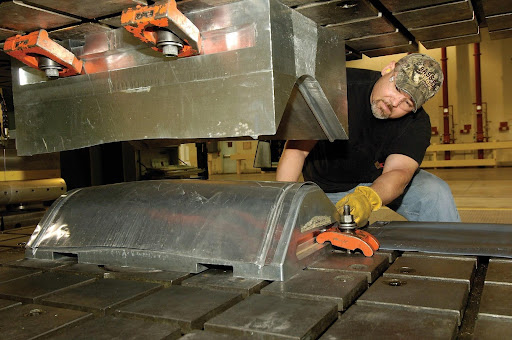
CASE STUDY:
Sheet Metal Worker Would Love to See the Back of his Lower Back Pain.
Hard at Work and at Play, this Client Needs to Feel his Best Every Day
History
Our Client is a very active man who works in construction 45-50 hours a week. He golfs, snowboards, goes to the gym and plays football twice a week. To keep up with his busy lifestyle he tries to get 7 hours of sleep each night and eats clean whole foods every day. He has serious lower back pain due to work and sport activities and would love to be relieved of that pain as he has suffered with it for the last few years. His job demands that he reaches and twists his body with a heavy tool belt around his waist.
Pain Scale (1-10): 5 Functional Scale (How Life is Affected) (1-10): 5
First Visit
Assessment
At the first meeting, Our Client reports to the Physiotherapist that he feels sacroiliac joint pain (in the lower back, close to the tailbone) that is worse in the evenings and is aggravated getting up off of the couch. He also feels it after playing 6-7 holes of golf. The Physiotherapist begins her detailed hands on assessment of his standing alignment. She finds that his shoulders are too low and his shoulder blades wing out. There is excessive chest and abdominal muscle tension leading to soft tissue pulls toward the front of his body. Excessive muscle tension or hypertonic muscles often lead to stiffness and difficulty moving the skeleton freely through full range of motion. His upper body looks twisted while the lumbar spine appears flat because of forward hip placement and loss of the natural lumber curve of the spine.
Hypothesis:
The excessive muscle tension in the front of his body has created an imbalance of tension, leading to the back muscles being overly stretched and stressed. The mal-alignment in his shoulder blades and twisted torso are significant contributors to the problem. The muscles pulling the body out of whack include rhomboids, pectoralis major, fascia or connective tissue of the chest, and abdominal muscles such as the external obliques.
The forward placed hips due to tight hip flexors and quadriceps were likely a secondary contributor to the problem..

Treatment
The Physiotherapist provides Soft Tissue Massage, Myofascial Release and Stretches to the affected muscles. She teaches self releases, doorway pectoral stretching, hip flexor and quadriceps stretching to ease tension. With postural correction of the shoulder blades, ribcage (ring) and hips, the Physiotherapist improves Our Client’s alignment and shows him how to maintain the corrections long term. Afterwards, the Physiotherapist observes an improvement in standing alignment and the Client reports reduced lower back pain at the end of his session.
Second Visit
Assessment
Our Client reports that he is starting to feel some improvement since his first session. Coughing and bending are no longer painful and he is able to sleep better at night. He still feels uncoordinated with exercises, but plans to work on these regularly and report back to the Physiotherapist if required. The Physio feels rhomboid knots and sees that excessive winging of the shoulder blades is still an issue, most noticeable during push-ups.
Treatment
Manual Deep Tissue Massage is provided for the rhomboids. Hands-on postural correction and education is provided through mirror work and self-awareness exercises. The Physiotherapist supports better scapular alignment, stability and mechanics during arm lifts, simulated gym exercises and during push ups. She explains how Our Client can build strength and create more optimal scapular posture at home.
Third Visit
Assessment and Treatment
As Our Client followed the Physiotherapist’s advice for corrective alignment techniques, she finds his standing alignment optimal. He still has tight pectoral muscles, stiff sacroiliac joints with a soft tissue pull to the midline of his chest and abdomen, but he is much improved. Last week’s treatment is repeated with a review on how to release the chest and abs as well as stretch the legs for daily maintenance. It is recommended to open the chest by lying on a foam roller or large ball and perform regular doorway stretches.
Physio Recommended Exercises to perform regularly:
- Chest openers using a roller – lying on the floor with roller lengthways along the spine
- Scapular stabilization through hand on ball on a wall: rolling the ball smoothly up and down, side to side, in arcs, circles and figure eights
- Doorway stretches to open chest and release pectoral muscles
Our Client has been receiving golf lessons to work on swing mechanics at the advice of the Physiotherapist.
OUTCOME:
Our Client reports no more pain and is pleased to say he was able to play 18 holes of golf again with no problems. Even after a hard day’s work he had no pain.
5 STAR REVIEW from Our Client (Mike Jones)