
Cervicogenic (neck-related) dizziness
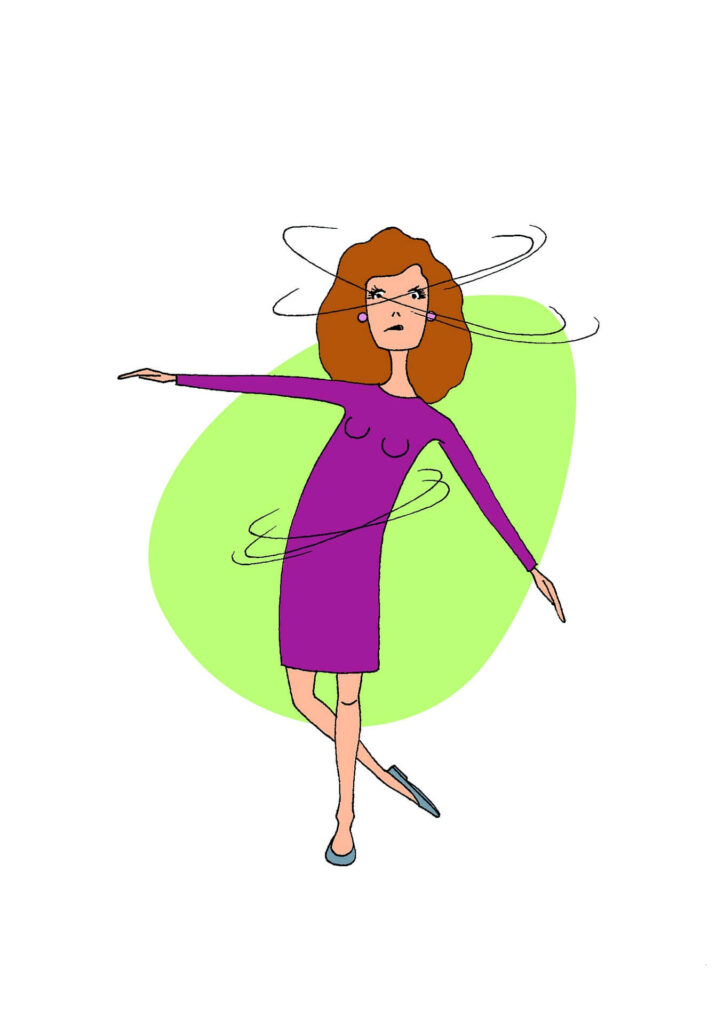
Several systems work together to help us maintain good balance and equilibrium without vertigo or dizziness – vision, inner ear, the brain (cerebellum) and the neuromuscular and sensorimotor systems.
That means the brain works with the eyes, ears, nerves, muscles and receptors to keep us balanced. One cause of dizziness that can be helped with physiotherapy is dizziness coming from neck tightness, stiffness and mal-alignment. This can send wrong signals to the brain leading to a feeling of disorientation and unsteadiness. The vertebral artery winds in a canal through the neck vertebrae and any kinking or compression can affect blood supply to the brain. In this situation, it would be dangerous to receive a high velocity manipulation by anyone including a chiropractor.
Treatment
The way to resolve cervicogenic dizziness is to restore muscle flexibility, joint mobility, even spacing between the vertebrae and resolve any kinks and areas of compression of the neck. Sometimes the way to do this is not by treating the neck itself but by working out kinks and compression in other parts of the body that is forcing the neck into a non-optimal compensatory posture.
The body performs best when restrictions are freed, a good amount of space and mobility is created and the optimal relationship between all parts of the body is achieve