
Pelvic and Sacro-Illiac Joint Pain
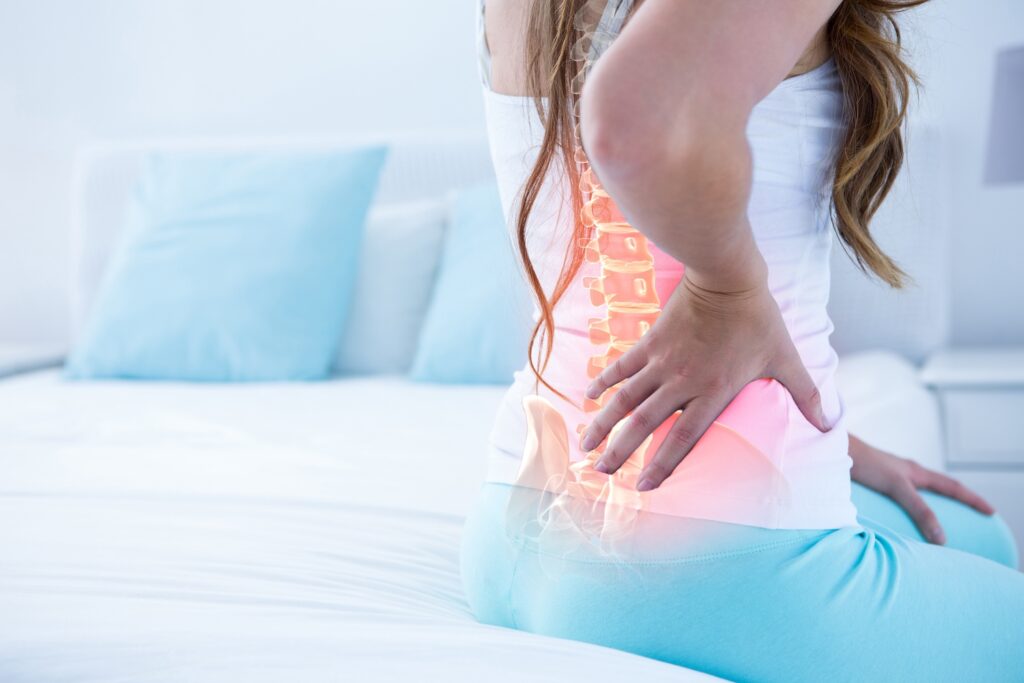
Do you have pain in the joints between your lower back and tailbone? Is it a pinpoint pain that you can put your finger on? Does the pain get worse when you roll over in bed, stand up from sitting and move in and out of positions? Then it is likely that you have sacroiliac joint dysfunction.
What Is The Sacroiliac Joint?
The sacroiliac joint is the intersection between the tailbone (sacrum) that joins to your lumbar spine and the pelvic bone (ilium) that connects to your hip, hence the term “sacro-iliac”. This joint is important because it transmits forces from the legs to the trunk and from the trunk to the legs. It is a junction where some motion occurs and when the pelvis is in a slight forward/ anterior tilt position, it gives a lot of stability. When the pelvis is in the backward/ posterior tilt position in weightbearing, this joint can become unstable and ligaments around it can get strained.
The sacroiliac joint is often stressed when the pelvis is misaligned: when it is stuck in a rotated position or when it is not level to the ground (as in one side is higher than the other). The pelvis should be straight and symmetrical in sitting, standing and during a squat. A position called posterior pelvic tilt is common, especially in the elderly population, possibly due to long periods of sitting, weak back muscles, or being taught the wrong posture at a young age. This is when the bottom is tucked under and the lumbar spine becomes too flat. The opposite case, which is an excessive anterior pelvic tilt, creates a very curved lumbar spine and is also not ideal.
Pelvic mal-alignment often happens after trauma such as a car accident, fall or sports injury involving impact during which the pelvis can get jarred out of alignment. Forces are introduced into the body that causes a twist, and this leads to compensatory twists in other parts of the body, resulting in pain, stiffness and feeling crooked.
What Causes Sacroilliac Pain?
Muscle tightness in the legs such as in the hamstrings can also lead to poor positioning of the pelvis. Weakness of the back and abdominal muscles, including the deep core muscles affect pelvic position and stability. Habitual postural dysfunctions such as collapsed foot arches, knock knees, bowlegs, and incorrect hip movement/ alignment can affect the sacroiliac joints from below.
How Can Physiotherapy Help?
Effective physiotherapy treatment for sacroiliac joint dysfunction involves addressing the factors affecting pelvic symmetry, whether it is postural habits, restrictions caused by trauma, muscle tightness, weakness and dysfunction in other parts of the body. It should be addressed in a way that restores normal alignment and movement of the sacroiliac joints and pelvis. Soft tissue techniques like massage, myofascial release, muscle energy techniques and stretching along with activating weak muscles will help to restore the balance.
Teaching the patient how to hold the pelvis in the right position first in standing, then followed by squats, lunges, single leg balance, and walking will be the progression. Correct whole body posture and movement, along with an optimal set up of furniture at home/ in the office, together with good footwear, sporting technique and equipment is a holistic way to manage and prevent pelvic and sacro-iliac joint pain.
Contact Physio for Life in Vancouver today to set up your next physiotherapy or telehealth appointment with our expert physiotherapist.
References:
Case study 1 – Sacro-iliac joint pain relieved by correcting the pelvis alignment
32 year old male patient suffered an acute low back pain which prevented him from moving in all directions. This happened during the pandemic so he booked a virtual physiotherapy appointment with Physio for Life. On observation, his pelvis was tilted excessively forwards, his lumbar spine was too arched. This posture made his back muscles and hip flexors short and tight.
When I taught him to stretch and massage these muscles (with the help of his room mate), followed by pelvic tilts to a more neutral alignment, he was pain free after 2 virtual appointments and has not returned for physiotherapy since. This was one of the most dramatic and quick recoveries from sacro-iliac joint pain I have ever seen, thanks to teaching him how to treat himself.
Case study 2 – Sacro-iliac joint pain relieved by correcting shoulder blade alignment
32 year old male patient with acute right sacro-iliac joint pain aggravated by sitting, running and working out at the gym. On observation, his shoulder blades were too low and close together and he had a pelvic mal-alignment which was made worse when he did a squat or stepped forward.
When the pelvis was temporarily corrected, it did not make the pain go away but when the shoulder blades were put in a perfect alignment, the pelvis aligned itself, the core muscles switched on naturally and that helped him to sit, run and exercise without pain.
I also made sure he was well positioned in front of his work station.