
Case Study: CEO Cycling
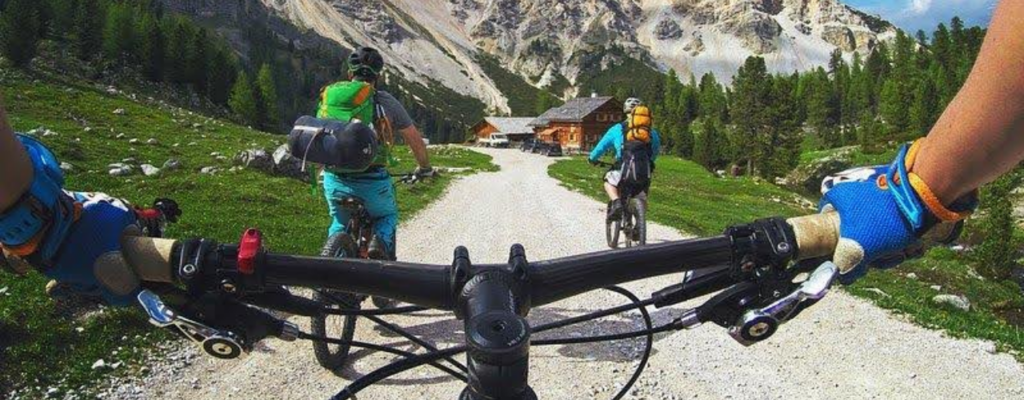
64 Year Old CFO Wants to Return to Cycling
History
3 weeks prior to coming into Physio for Life, a busy CFO (Chief Financial Advisor) had an accident on his bicycle.
Another cyclist rode into him and he went flying over the handlebars, landing on his left shoulder. A CT scan revealed a fractured 2nd and 3rd rib on the left side. He complained of tenderness in his neck at cervical vertebrae 3 and 4.
Although his job is sedentary, he keeps healthy through his favourite sports. He really did not want to give up his active lifestyle due to pain or worry over how his body will perform after this injury. He had been training and looking forward to a bike tour of Germany and Austria.
Pain Scale (1-10): 5
Lifestyle Affected (1-10): 5
Assessment
First Visit
Every assessment involves a careful look at standing alignment and posture as well as a conversation about where pain is felt, when it feels worse and what makes it better.
Our cyclist presents with:
- His head side tilted to the right
- His pelvis rotated to the left
- His hips in an anterior position causing the head and stomach to move forward out of optimal spinal alignment
- A prominent acromioclavicular joint (AC) in the left side
- ACJ pain and AC ligament tender
- Tenderness in Ribs
He also reports lateral hip pain with prolonged cycling.
Treatment
First Visit
Through manual manipulation of his shoulder movement, the Physiotherapist hunts for the best corrective treatment, which often involves massage and stretching for other areas of the body. In this case the pectorals on the left side need to be released as well as the tight hamstrings, quadriceps, IT bands and adductors of the lower extremities.
Soft tissue mobilization and deep tissue massage to these muscle groups along with alignment correction to the left shoulder results in a reduction in pain and an increase in range of motion after the first visit.

Education: The Physiotherapist takes the time to demonstrate correction of posture in the mirror and provides ergonomic education so that our cyclist can learn to keep his shoulders and hips centred on his own.
Second Visit
The Physiotherapist continues to examine the mechanics of our client’s movement and alignment, learning more and applying new treatments to best serve his particular needs. She discovers tenderness in the posterior and lateral rib cage possibly from earlier injuries and adds massage and stretching for the calf muscles. She explains self treatment and stretching exercises for the client to do daily at home. The ACJ ligament is again massaged and mobilized. Posture is corrected in the lower thorax and pelvis region where rotation is seen and stretching for the neck is repeated as his head is still tilted to the right.
Third Visit
Our client reports that his upper back feels weak when riding over speed bumps. The Physiotherapist checks posture and alignment again for the head tilt and thorax/pelvis rotation. Corrections are made again so the client can feel the difference and learn to self-correct with a mirror. The Physio discovers that adjusting the Lumbar Spine through massage of the paraspinal muscles helps correct Thoracic spine alignment. She then teaches spinal mobility exercises to strengthen the upper back. Soft tissue massage over the rib cage also helps.
Fourth Visit
Our client reports slight discomfort and limited range of motion in his shoulder while swimming the front crawl, otherwise he has no complaints. The Physiotherapist finds shoulder circumduction limited at end range with tender, tight rotator cuff tendons and acromioclavicular ligament. The inferior and posterior shoulder capsule is also sensitive to manual manipulation. Deep tissue and soft tissue massage is provided. Standing alignment is much improved with minimal thoracic and pelvic rotation. Self-correction and body awareness are helping. Lower extremity stretches are also prescribed for the quadriceps, hamstrings, IT bands and hip adductors. Exercises are added for regular maintenance: Child’s Pose and Inclined Cobra stretch for back and shoulders as well as wall stretches to reach end range shoulder flexion. Releasing Pectoral muscles through stretching is also recommended.
Outcome
Our Cyclist is feeling good, going for long bike rides and says that he feels ready for his European bike tour. Shoulder flexion has reached 180 degrees. Tender scarring exists in his AC ligament and rotator cuff tendons from his accident, but with regular self massage, stretching and learned exercises our client can remain active and enjoy the healthy activities he enjoys most.