
May is National Physiotherapy Month
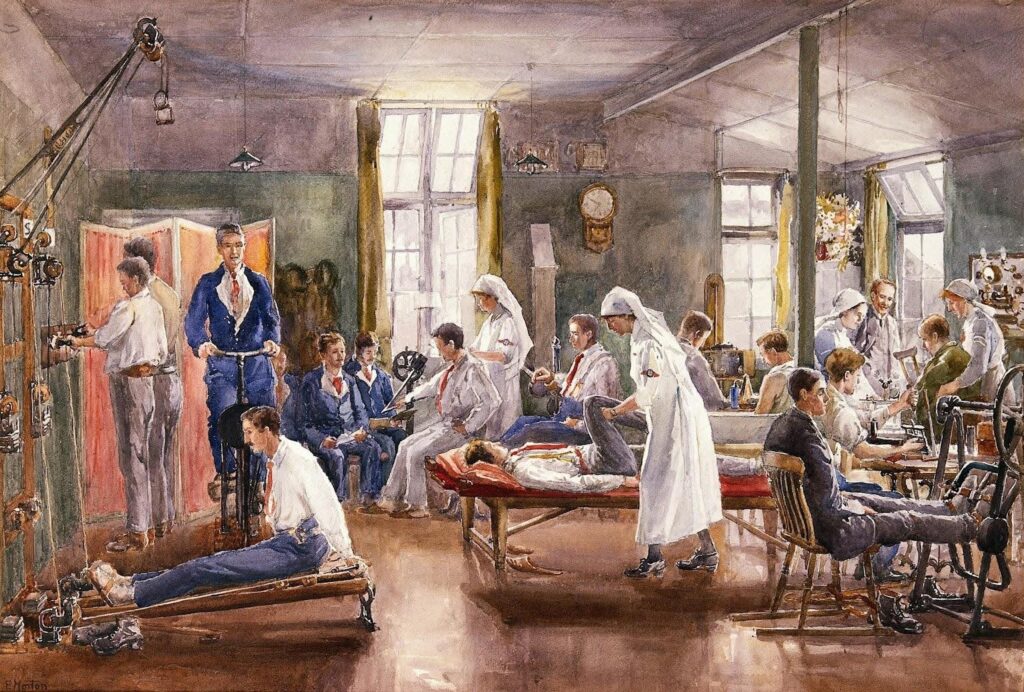
The History of Physiotherapy in Canada
Every month of May we take some time to recognize the Art and Science of Physiotherapy.
This year we highlight the extraordinary efforts of women who pioneered the growth of Physiotherapy as a profession. It is not surprising that it was a group of nurses who organized themselves into the first physiotherapy providers in the modern world.
Women Lead the Way in Making Physiotherapy What it is Today
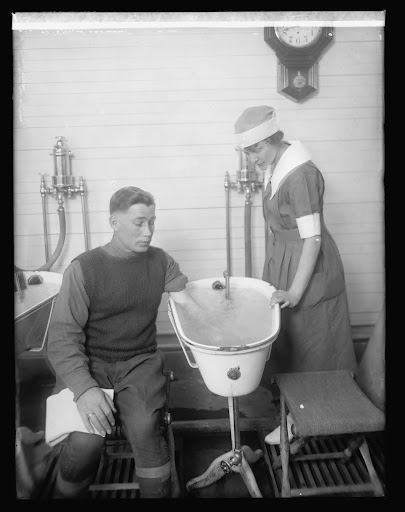
Massage was used as a treatment for muscular pain in the time of the Ancient Greeks and written about in Chinese history as early as 4000AD, but Physiotherapy really began to grow in recognition and appreciation as an effective form of health care during the World Wars.
A British Birthplace
In 1895 a small group of nurses in Britain began using massage to help their patients recover functional movement after illness or injury. Together they formed the Society of Trained Masseuses (STM).
When World War I broke out in 1914 a wealthy MP, Almeric Paget and his wife, Pauline, sought to help the British War Office cope with the many casualties. They supported a group of 50 trained masseuses to work with soldiers wounded in battle. These women worked long tiring hours for very little pay and no pensions. They were viewed as heroines by many recovering soldiers. “Nearly 8 million men came home permanently disabled and it was clear that more established therapy services were needed to support these people long-term.” (Harris, 2014) Charities for rehabilitation facilities were formed and physiotherapy as a health care profession progressed. Through electrotherapy, hydrotherapy, exercise and massage, men who could hardly move, began to rehabilitate in body and mind. People began to notice the healing power of this approach to recovery.
Men are now accepted as members and allowed to train as Physiotherapists.
In 1920 the Society of Massage and Medical Gymnastics was chartered by King George V. Shortly thereafter it was named the Institute of Massage and Remedial Gymnastics (IMRG) and men were able to apply for membership for the first time.
Public Esteem was Hard-Earned
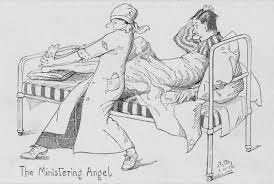
Medical massage was gaining popularity, but it was still much harder for women to garner respect as practising therapists. The word massage brought up images of massage parlours and brothels and people were not always kind. Fortunately, there were people to stand up for them. One past patient even wrote to a local newspaper to say that the physiotherapists “did their duty in the most unselfish and unsparing fashion” He hoped that “these ladies may be assured of the gratitude and respect of many a disabled soldier” (Harris, 2014)
1920 also saw the formation of the Canadian Association of Massage and Remedial Gymnastics (CAMRG) as British practitioners brought their knowledge and practice to Canada. Most of the services were entirely new concepts, so training and regulation were needed.
“In 1929 the University of Toronto inaugurated a two-year diploma course in physiotherapy. Indeed the course resulted from the sustained efforts of a group of energetic women during the previous decade. These women were committed to building a new “women’s profession” in the health sector” (Heap, 1995)
1934 – the CAMRG officially becomes the Canadian Physiotherapy Association (CPA)
Through the Wars
Physiotherapists played no small role in the war effort. As the Second World War was declared, members of the CPA were placed on alert to provide their services as required. Treatment for injured soldiers included electrotherapy, hydrotherapy and massage along with remedial exercises to regain strength.
Olive Guthrie-Smith (OBE) and pioneer of “Weightless Exercise”
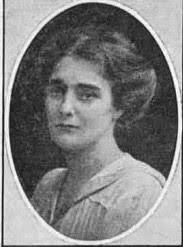
One stand-out woman, Olive Guntrie-Smith was a true pioneer of Physiotherapy as a profession. She was one of the original 50 masseuses to help serve soldiers in WWI and was eventually recognized for her work with an Order of the British Empire. While working with pulleys to exercise the upper body of one of her patients, she tried suspending his paralyzed leg to see if voluntary movement in the limb could be encouraged by removing the load of gravity. (Hollis) She did indeed observe some movement and she went on to develop “weightless exercise” to rebuild strength in weakened and even paralyzed extremities. Her methods are still used today. Physiotherapists help their patients recover mobility and loss of function by starting with a passive (or weightless) range of motion, moving toward active-assisted movement and then to resistive strengthening as mobility is regained.
The Polio Pandemic of the 1940s
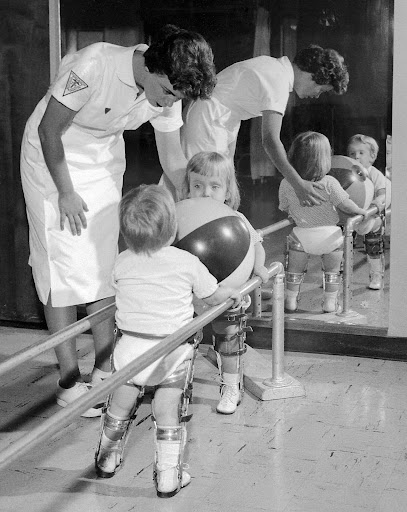
saw a new surge of interest in Physiotherapy as a treatment for survivors of this debilitating viral disease. Hydrotherapy centres were opened and the benefits of physical therapy were seen worldwide.
“The early 1950s saw the introduction of manipulation of the spine as well as extremity joints. It became increasingly commonplace to see physiotherapists in hospitals throughout North America and Europe” (Lynch, 2017)
In the 1960s and 70s Cardiopulmonary Therapy developed under the Physiotherapy umbrella. The importance of conditioning heart and lung health through physical movement and deep breathing in patients both pre and post-surgery was recognized as more positive outcomes and quicker recoveries were observed. (Moffat, 2003)
1980s – Physiotherapists are Recognized as First Contact Professionals able to Triage and Diagnose.
2000s – Physiotherapy is increasingly recognized as the leading professional consult for the prevention and treatment of impairment and functional limitations and disability related to the brain and neuromuscular system.
Present Day Representation:
Statistics show that in 2014 75% of physiotherapists were female. As of 2022, globally, 62% of practising physiotherapists are female. (Women in Leadership in the Global Physiotherapy Profession, 2022). In Canada, as of 2022 more than 70% were female (Physiotherapists | CIHI, n.d.)
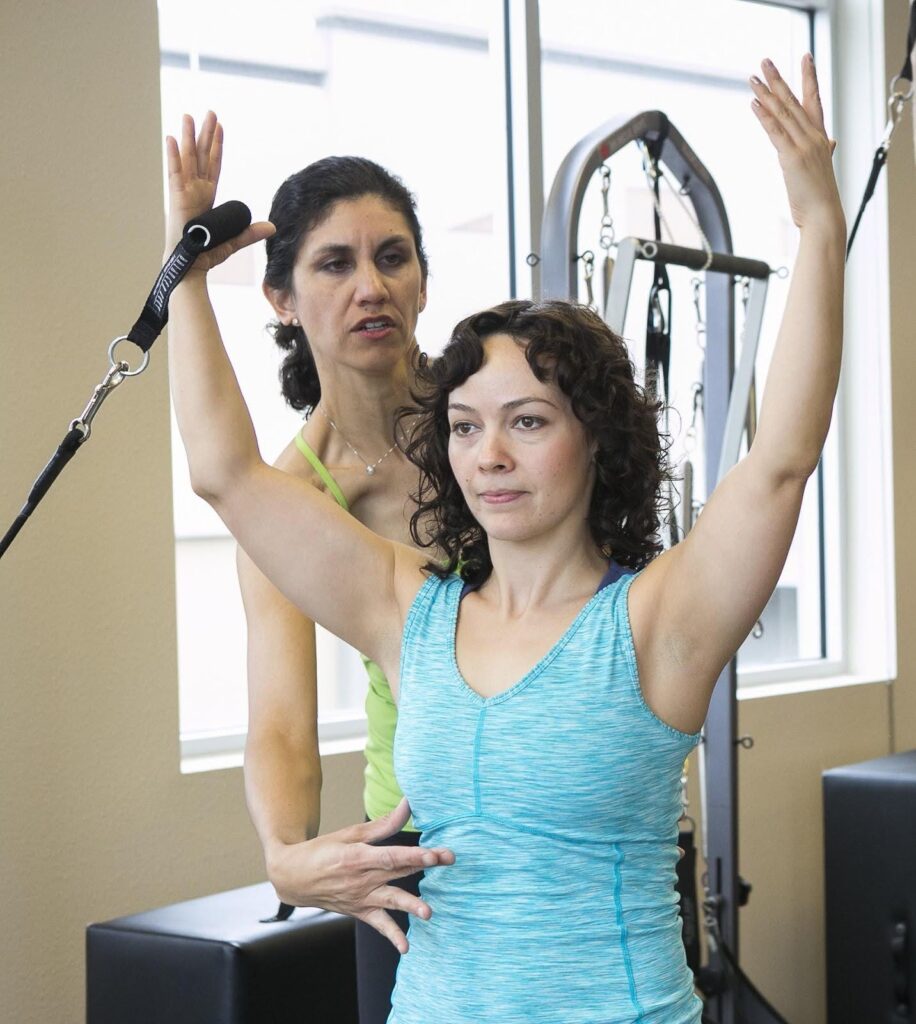
As we shift to a more equal ratio of male-to-female physiotherapists working today, how will the practice of Physiotherapy continue to evolve? Will it gradually lose the art of healing through attentive nurse-like care in favour of more specialization for specific injuries and sports-related training exercises? Or will the legacy of holistic healing prevail? As gender identity has changed so much over the years, does gender still pose any noticeable differences within a profession?
Present trends in health care show increased emphasis on health and wellness in society with more people looking for preventative care. An ageing population is demanding more support for people looking to maintain their mobility while treating age-related conditions. Mental health is increasingly prevalent and, as more and more people battle depression, we are learning how an interdisciplinary approach to treatment that includes addressing optimal physical wellness can help. Physiotherapists have a role to play here.
From the 1990s through to the present day, we have seen advancements in technology, including artificial intelligence transform every professional sector. Health care is a dynamic landscape that is evolving with it. The challenge for Physiotherapists will be to keep the nurturing roots of this occupation an integral part of the service. What better way to do this than by celebrating women in Physiotherapy now and in the past? Women Mentoring Women In North America we could continue to grow an effective and powerful future for Physiotherapy by encouraging women in minority ethnic groups to enter into this career path.
- https://www.cihi.ca/en/physiotherapists
- https://www.csp.org.uk/frontline/article/foreign-fields-physiotherapys-links-first-world-war
- http://doi.org/10.2307/369630.
- https://doi.org/10.1097/00001416-200310000-00003
- https://inretrospectmagazine.com/article/history-of-physiotherapy/
- https://world.physio/news/women-leadership-global-physiotherapy-profession
- http://www.physio-pedia.com
- http://www.csp.org.uk