
Case Study – Online Physiotherapy and Frozen Shoulder
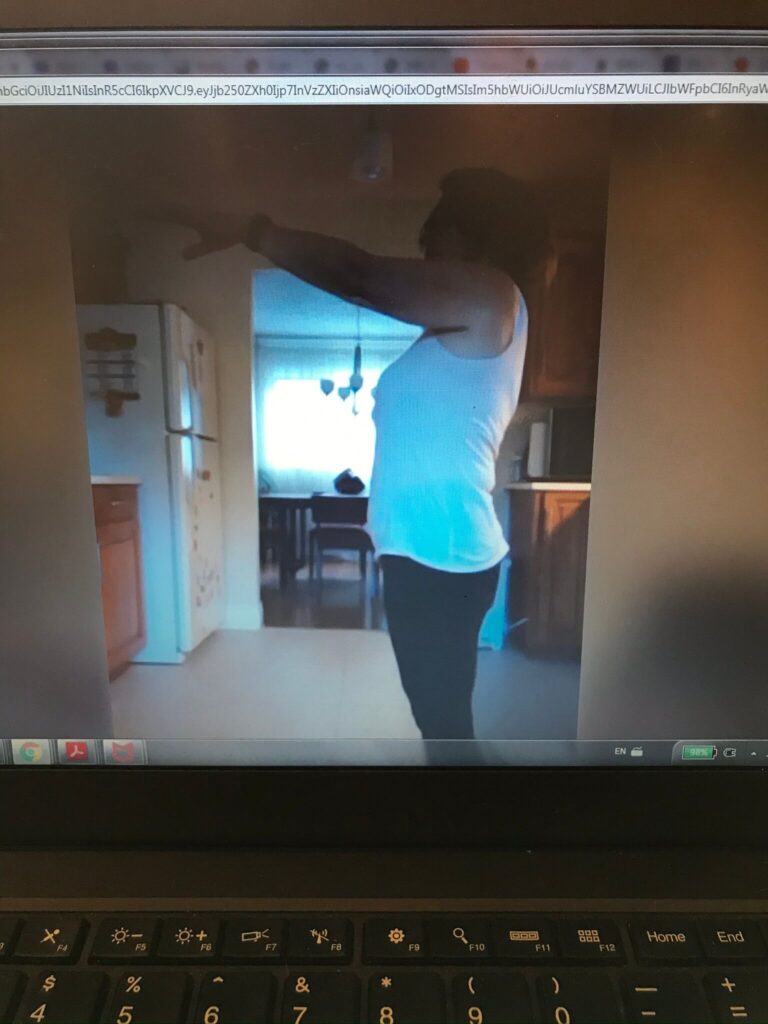
65-year-old female client with recurrence of left frozen shoulder that started a month ago. Her left shoulder and arm pain level was 5-6/10 at rest and 7-8/10 with movement especially reaching up and reaching behind her back. She could only lift her arm to 90 degrees forward, 60 degrees to the side and 10 degrees backward which was the most painful movement.
Her past history included a number of car accidents and bad falls as a figure skating teenager. When observed in standing, her neck appeared short and compressed and the bumps on her upper chest indicated rotated, mal-aligned ribs 2 and 3. Her left shoulder was held forward with her arm stuck to her body.
After some test corrections, it was found that lifting up or decompressing her neck gave the most relief, followed by correcting the mal-aligned ribs in the front of her chest. This likely took pressure off nerves that originated in the neck and upper thoracic spine and went to her arm. She was taught massage, release and stretch techniques to muscles of her neck and chest to open and create space in these areas. This was her homework for the week.
These techniques gave her immediate relief from the resting pain and her shoulder range of motion increased to forward 110 degrees and sideways 85 degrees. She taught the same simple stretches to a neighbour with a similar condition and he told her the next day that he had not slept so well for such a long time, calling her the “Magic Lady”
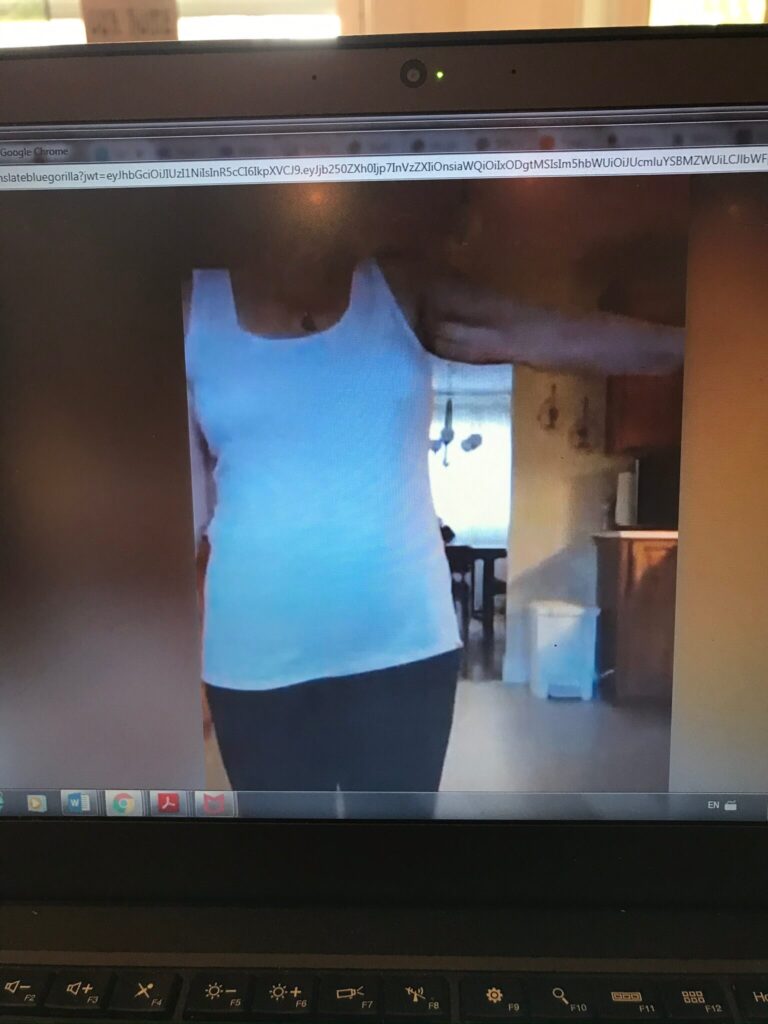
By the second session, her pain had subsided by 50%. We worked on the neck and rib treatment and corrections, reviewing and fine-tuning. Once her pain had subsided even further, she then proceeded to release bound up muscles, ligaments and the capsule of the left shoulder. This further increased her shoulder mobility forward to 135 degrees.
After 2 online sessions in 10 days, she was delighted at the rapid progress. She no longer had any resting pain and compared her status to the equivalent of gains made after previous in-person physio visits twice a week for 5 months.
She attributed the progress to getting educated and learning how to treat herself so that she could repeat the techniques two to three times a day every day. This new habit took the pain away considerably so that by the next online session, she was ready to make another leap forward. This case study shows the power of consultative physiotherapy using a virtual platform without any hands-on touch in a motivated client.