

Could Your Posture be the Reason for Your Aches and Pains?
Do you suffer from daily or recurrent aches and pains? If so, your posture may be the culprit.
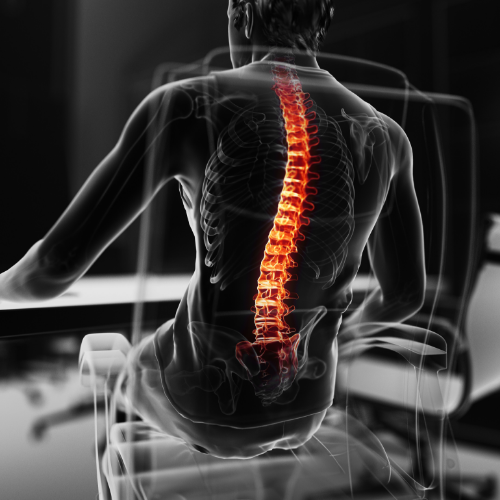
Just think about the number of hours a day we spend staring at a computer screen, hunched over our desks, or staring at our phones… that is a lot of stress on the neck and back, especially if you are slouched, tilted forward, or looking down for prolonged periods of time.
At Physio For Life, we can help get to the root of your postural issues so you can go about your daily tasks without pain. Request an appointment with us today to find out how.
How does poor posture affect me?
Changes to your posture can negatively impact your body. If your posture is poor in one or multiple areas, you may experience some of the following symptoms:
- Forward head posture – This forward-head posture creates a strain on the neck, which can lead to neck pain, shoulder pain, arm pain, chronic headaches, and/or lower back pain. Tilting your head forward for long periods of time shortens the muscles in the back of the neck, and can result in soreness throughout multiple parts of your body.
- Slouching of the mid-back – If the middle of your back is slouched, this drives your head forward and alters the way your ribs naturally align. You may experience pain at the apex of the curve of your mid-back, in addition to pain in the neck. If this is your average standing posture, it is important to seek physiotherapy treatment right away because over time, sitting and standing like this day after day may cause internal issues, as it creates pressure on your lungs, heart, and digestive system.
- Stand with forward hips – the forward hip or swayback posture is typical for those who stand for long periods of time. It is easier to stand this way because it reduces the muscle activity required and places the load passively on ligaments. However, long periods of load on ligaments cause stress and strain that also places stress on nerves and other sensitive structures, leading to pain.
- Sitting for long periods of time – When you sit for prolonged periods of time, the muscles in your hips and legs will shorten. When these muscles become short, they tighten and pull on the lower back, causing pain. This posture also places enormous amounts of pressure on the lumbar discs (gel-and fluid-filled shock absorbers between vertebrae) which can herniate or prolapse. The inner disc material that oozes out can compress nerves leading to numbness and tingling down your leg.
Your posture can also have an effect on the way you walk. When your posture is improper, your center of gravity changes. This can disrupt your balance, putting you at risk of pain and falls, thus creating a vicious cycle of overcompensation, pain, and imbalance.
The most common symptom of poor posture is lower back pain, although you may also notice pain in other areas of your body. The back muscles constantly contract to keep you upright, and they are on heightened tension when you slouch or hunch over. Over a period of time, constant poor posture can create an unusual amount of wear and tear on the lower back, which accelerates the degenerative changes in the spine.
How can I improve my posture?
Poor posture can be tricky to fix, especially if it has become a habit. However, there are a few tips you can try on your own to improve your posture outside of your physiotherapy treatments:
- Sit properly. If you are at a desk for extended periods of the day, make sure your stance is okay. Sit upright, place your feet flat on the floor, and try not to cross your legs. Make sure there is a small gap between the back of your knees and the chair. Having a chair with strong back support and padding is also recommended for making your upright position more comfortable.
- Take stretch breaks. If you are an office worker, it is no secret that most of the day is spent with limited levels of mobility. It is important to make sure that you get up every 30 minutes or so and take a small walk, at least for a minute or two. This will help in loosening up your muscles and joints, as well as initiating better blood flow.
- Exercise. Exercise is incredibly important, especially if your job involves hours of inactivity. When you exercise, you are stretching and strengthening muscles in your body, including problem areas such as your neck and back, reducing the likelihood of muscle imbalances. Taking even a small amount of time to walk or jog around the neighborhood every day can greaty improve your posture and gait.
- Set up your office properly. If you work from an office or home office all day, it is important to have a proper ergonomic setup. Make sure that you are at a proper height in relation to your desk, chair, monitor, mouse and keyboard, so you do not have to strain to reach the keyboard/ mouse or look at the monitor. Additionally, make sure your chair has the proper lumbar support needed to help you sit straight while working. These simple steps can help tremendously with your overall posture.
See How We’ve Helped Others!
Get help with physiotherapy:
If these at-home treatments do not work, it is important to consult with a Vancouver physiotherapist. It is a good rule of thumb to seek the help of a physiotherapist as soon as you begin noticing postural issues, regardless of how severe they are or whether or not you have tried the aforementioned tips.
Simply standing up straight is a fight against gravity. If you have been standing the wrong way for years, it may be difficult to change it on your own.
Your physiotherapist will evaluate your posture and gait to determine the best treatments necessary for you. Afterward, a personalized treatment plan will be designed, based on your specific needs. You may be surprised at how fast your posture can change with the help of awareness, focus, repetition, and practice.
At Physio For Life, we help relieve pain caused by postural issues and get you back to living your life without pain. In fact, this is our unique specialty and expertise. We believe posture is the key to effective pain management, better balance, and top physical performance.
To learn more about how we can help improve your posture and get you on track toward a more effective and efficient way of sitting, standing, and moving, schedule an appointment today. We can help you find relief after just a few short sessions!
Your Next Steps…
Request An Appointment
Receive A Custom Treatment Plan
Work Hard and Progress In Your Recovery
Recover & Enjoy Life Pain-Free!